
Tia Ansell
Past exhibition
Works




Overview

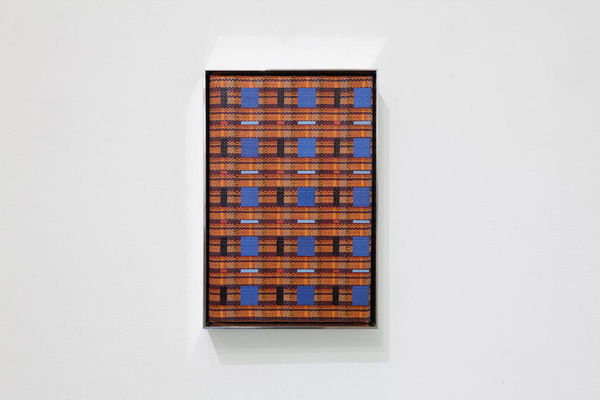
In her latest body of work, Aotearoa born, Melbourne-based artist Tia Ansell draws deeply from the urban textures of her surrounding environment, focusing on two iconic localities rich with cultural memory and design heritage: Lygon Street in Carlton and a classic terrace house in Moor street Fitzroy. These works serve as both visual documentation and personal reflections, mapping the embedded histories of Melbourne's inner north through meticulous pattern, rhythm, and materiality.
Lygon Street, often referred to as Melbourne’s “Little Italy,” has long been a centre of Italian immigrant life. From the post-war years onward, this district became synonymous with espresso culture, terrazzo flooring, family-run trattorias, and the distinctly Mediterranean palette that shaped the visual and social identity of Carlton. Through her sensitive interpretation of this landscape, Tia translates the vibrancy and structure of Italian design traditions- ceramic tiling, woven textiles, and ornate masonry- into abstract compositions that suggest both street grids and domestic ornament.
The terrace house in Fitzroy, with its terrazzo entrance and ornate architectural details, becomes another site of exploration- both intimate and emblematic. Here, Tia traces the residues of migration and settlement, emphasizing how Italian craftsmanship shaped everyday Australian architecture. Terrazzo, a material rooted in Italian building traditions, becomes a metaphor for hybrid identity: composed of fragments, yet unified in pattern.
Pattern, in Ansell’s work, becomes more than decoration. It is a vessel of memory and migration, a language of belonging. Her precise, often grid-like works evoke the ordering principles of urban space while celebrating the ornamental languages that diaspora communities bring with them. These are not just abstracted compositions, but tactile mappings of place, culture, and time.
Tia Ansell considers how design, especially pattern and surface holds the stories of community, displacement, and adaptation. In rendering the familiar motifs of Melbourne’s Italian enclaves, she constructs a contemporary archive of place, offering a poetic meditation on heritage embedded in the fabric of the city.
